

隔热结构是保护高速飞行器安全工作和完成各项任务的关键因素,有效的隔热结构可以满足高速飞行器隔热的基本需求,使其免于极端气动热环境的伤害[1]。作为新型耐高温材料,C/SiC复合材料不仅展现出优异的机械性能,包括轻量化、高比强度、高比刚度,还具有卓越的耐高温和耐腐蚀能力[2]。其优异的力学性能和抗氧化性能可作为高温复合材料部件的首选[3],在高效轻质防热一体化方面和航空航天领域也被广泛采用,展现出卓越的应用潜力[4]。 国内外学者针对C/SiC材料及点阵结构进行实验、仿真、理论等研究。其中,Lee等[5]基于传热性能和失效机制,研发了一种半金属丝编织散装的Kagome核心设计。Chen等[6]采用酚醛树脂前驱体浸渍热解和液态硅渗透法,成功制备了一种碳纤维增强的高导热碳化硅基复合材料。Chan等[7]提出一种用于计算填充介质饱和的石墨烯涂层金属泡沫的有效导热性理论模型。Wei等[8]设计了一种由陶瓷基体C/SiC复合材料制成的新型金字塔形晶格夹芯板。Wang等[9]通过适当设计层数及多孔碳化硅片的孔隙率和厚度,可以动态控制和优化结构的隔热效率。Cheng等[10]使用新模型预测了晶格芯夹层结构的等效热导率,预测结果与实验和有限元方法结果非常一致。Wei等[11]提出了一种以高温C/SiC陶瓷为主要成分的金字塔形晶格复合材料的创新设计,并探索其优异的热防护性能。Liu等[12]深入研究了温度对点阵结构失效机理的影响,预测了不同温度下夹层板的刚度和强度,并与实测结果进行了比较。Wang等[13]通过理论分析和数值建模,探究了一系列体心立方晶格夹芯板的有效导热和传热特性。Chen等[14]制备了C/SiC波纹点阵结构夹芯板,并通过自主开发的加热系统,结合红外热成像技术测量了其隔热性能。Sun等[15]研究了不同预制体结构的C/SiC复合材料的导热性能,比较了3D正交编织复合材料和3D五向编织复合材料的热导率。
在点阵结构隔热领域,前期的诸多研究工作已取得了丰硕成果,然而,运用仿真模型针对点阵结构隔热性能在各向异性维度的探究尚显不足。因此,本文针对波纹点阵结构的隔热性能展开各向同性及异性的模拟仿真分析。
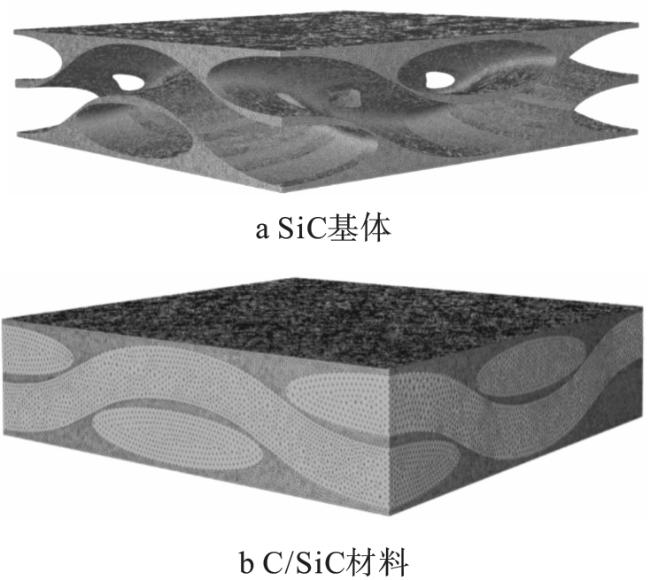
1 材料结构及工艺制造
1.1 波纹点阵结构工艺流程
1.2 C/SiC的结构特征
2 C/SiC微观模型的建立
3 结构网格划分
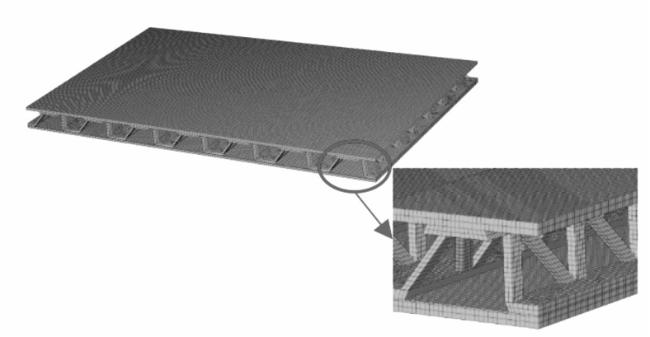
图4为波纹点阵结构模型网格划分示意图,共采用3*105网格数量进行ABAQUS仿真计算。上、下面板均采用C3D8R结构方法划分六面体网格,而波纹点阵芯子结构复杂,不能直接进行网格划分,需将几何模型拆分成两部分并采用扫掠方法划分六面体网格。
4 波纹点阵结构各向同性隔热分析
4.1 波纹点阵结构稳态隔热结果分析
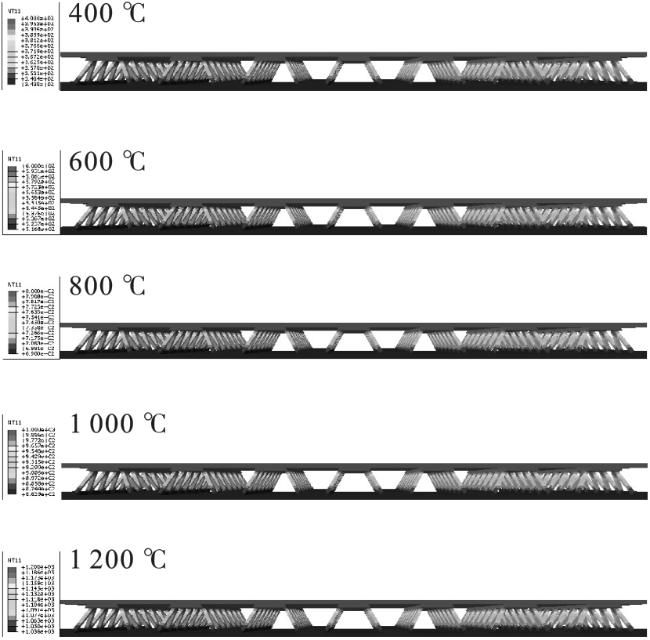
图6为不同温度边界条件下温度场对波纹点阵夹芯结构的影响。当下面板平均温度变化小于0.1 ℃/min时,认为结构传热达到稳态。5组仿真结果的温度分布从上面板到下面板沿中间芯子板均匀分布且逐渐降低,下面板温度最高的位置位于芯子板与下面板的连接处,且下面板温度分布呈周期性均匀分布。在400~1 000 ℃温度下,阻隔效率为13.89%~14.12%。
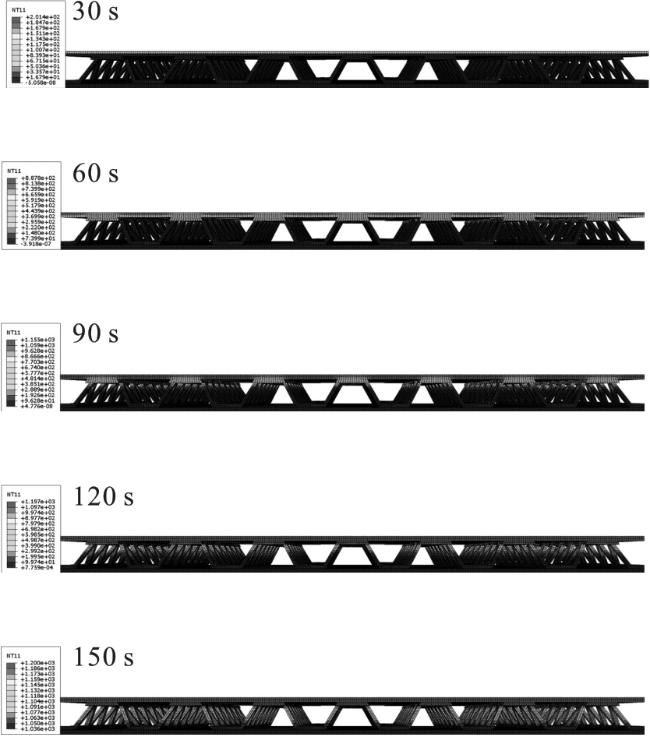
4.2 波纹点阵结构瞬态隔热结果分析
5 波纹点阵结构各向异性隔热分析
5.1 纤维尺寸对各向异性夹芯板隔热性能的影响
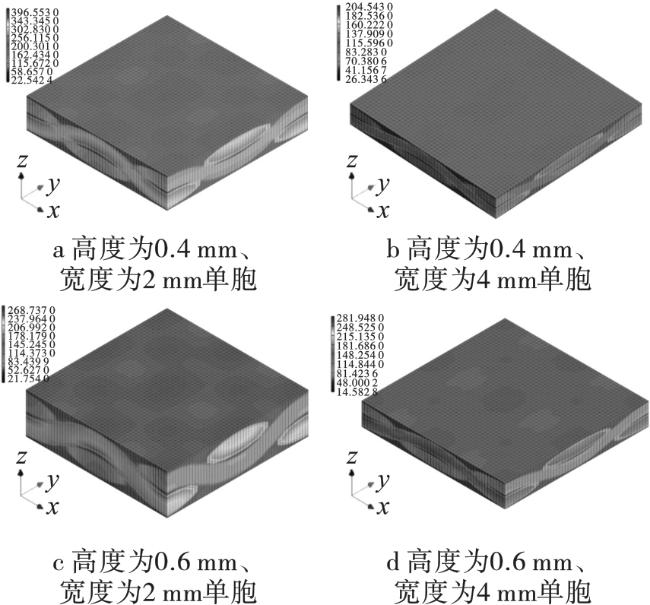
图8为C/SiC不同纤维尺寸单胞结构模型图。在各向异性隔热的研究中,需分别设置碳纤维和SiC基体的材料属性,在装配模块的设定中,需将纤维与基体接触面的部位结合。
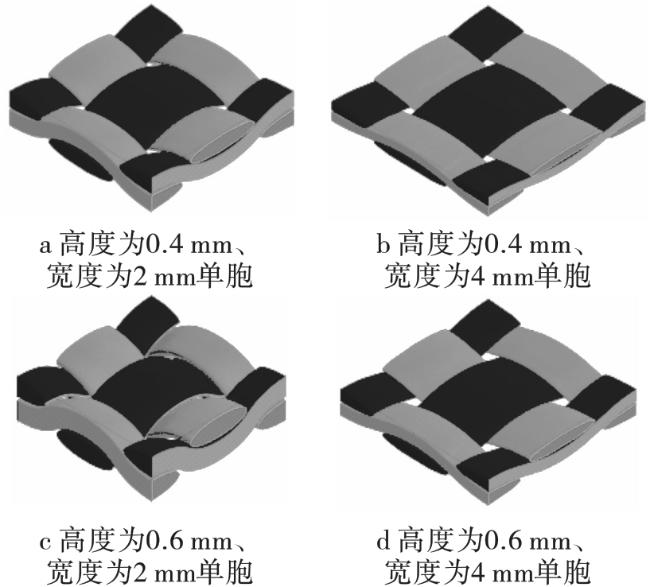
图9为C/SiC 4种纤维结构参数单胞的热场云图。由仿真结果可知,C/SiC材料的隔热以碳纤维为主导。在上面板施加温度载荷,由于SiC基体材料的隔热性能优于碳纤维材料,在传热过程中,碳纤维吸收的热量较难释放而积聚在纤维内部中,而纤维热量的释放主要依靠纤维与基体接触的表面,因此碳纤维与SiC基体接触位置的温度略低于碳纤维本身的温度。
5.2 纤维含量对各向异性夹芯板隔热性能的影响
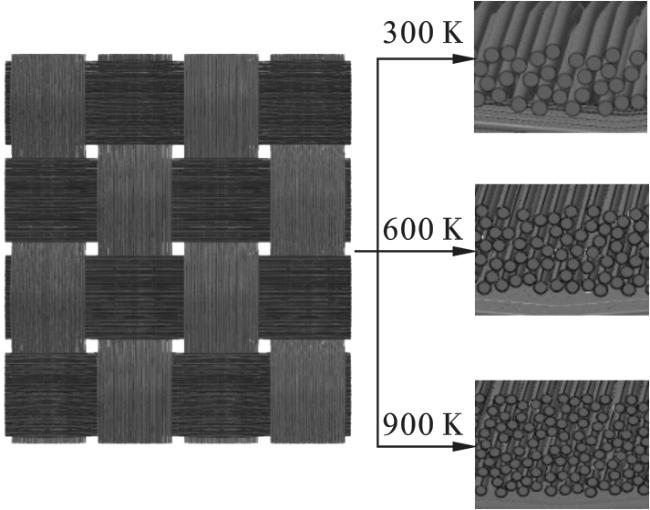
在平纹编织C/SiC微观结构中,通过改变碳纤维的数量来改变整体复合材料结构参数。本节分别对300、600、900 K 3组纤维在同等高温条件下隔热性能进行仿真研究,其微观几何模型缩放图如图10所示。
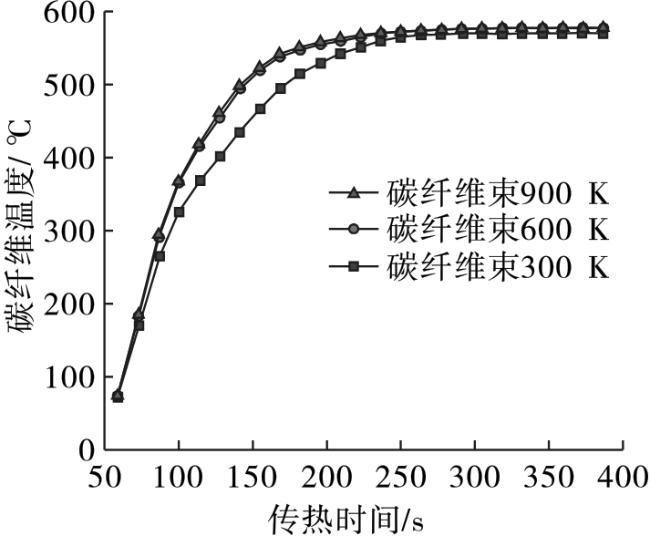
在整体尺寸参数不变的情况下,不同纤维束随时间的温度传递图如图11所示。其中,600 K和900 K的温度趋势基本一致,其最大温差为3.72 ℃,误差范围小于5%,证明了高纤维束在热传递过程中结果的准确性。由于600 K与900 K纤维数量较多,网格之间质量较好,因此仿真结果相似。而300 K的模型纤维数量较少,导致网格略粗糙,影响隔热过程中的曲线走势,但最终结果是3条曲线均收敛于587 ℃,可以验证纤维束的结构参数在各向异性隔热中的影响。
5.3 编织方式对各向异性夹芯板隔热性能的影响


6 结论
本文构建了综合考虑各向同性与各向异性效应的C/SiC复合材料波纹点阵结构的热传递模型。基于ABAQUS仿真软件研究了各向同性中稳态、瞬态条件下温度梯度对热传递系数的影响,分析了各向异性中纤维尺寸、纤维含量、编织方式对结构隔热的影响规律,得出结论如下:
1) 在各向同性传热中,针对多温度梯度展开系统分析发现800 ℃和1 000 ℃温度条件下结构展现出相对较高的阻隔效率,其峰值达14.12%。该现象归因于C/SiC材料在特定高温区间与空气中氧气发生氧化反应,致使材料内部微观结构与热物理性质发生变化,改变了材料的导热路径与热阻分布,进而对结构整体隔热性能产生显著影响。
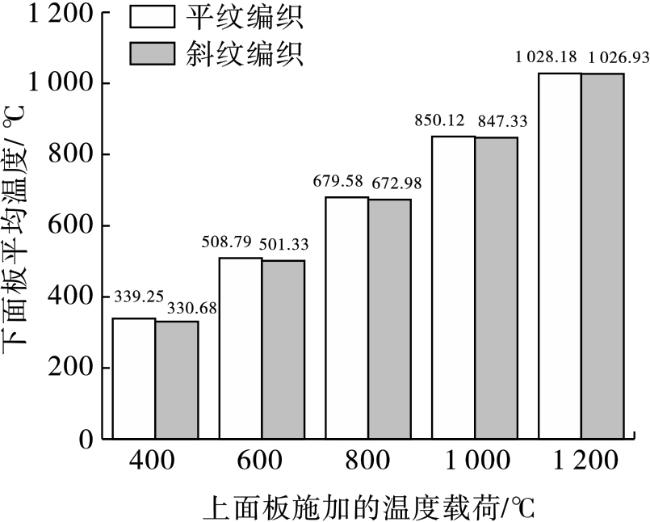
2) 在各向异性建模中,着重针对纤维尺寸参数进行精确量化设计,构建其与传热特性之间的内在关联模型。深入探究纤维含量的占比对结构整体传热的影响机制,并通过数值模拟将其纳入到传热模型的关键变量体系之中。同时,聚焦于编织方式的结构因素,针对不同编织方式下纤维的排列组合形态进行模型建立,进而建立起能够全面反映对各向异性传热影响的精细化模型架构。
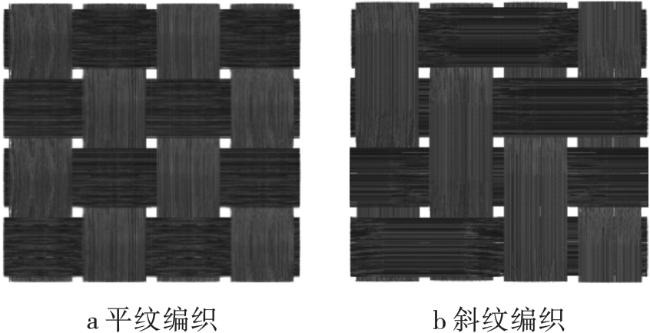
3) 在各向异性传热中,考察纤维尺寸对隔热性能的影响规律发现,随着纤维宽度的增加,结构的隔热性能呈现逐渐提升的趋势。研究纤维含量对热传递系数的影响发现,当纤维含量达到600 K时,温度对热传递系数的作用效果变得极为微弱。对比斜纹与平纹两种典型编织方式对隔热性能的影响效果可知,斜纹编织在隔热性能方面展现出明显的优势。